
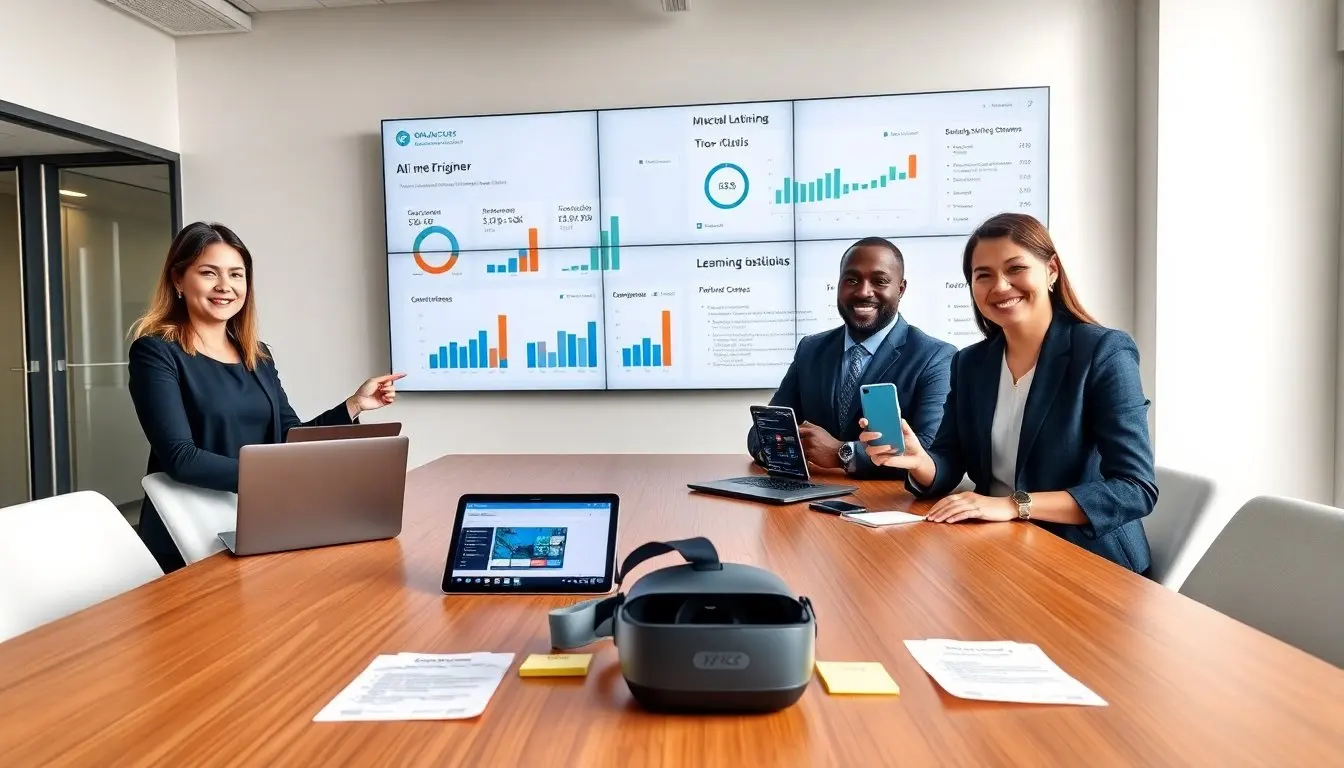
Microlearning trends 2026 appear across corporate training, higher education, and consumer apps. Researchers point to AI, XR, and performance data as main drivers. Organizations adopt short modules for retention, speed, and cost control. Learners prefer focused lessons that fit work rhythms. This article lists key trends and shows how teams design and measure effective microlearning in 2026.
Key Takeaways
- Microlearning trends 2026 center on AI-driven personalization, XR integration, and performance data to boost retention and skill acquisition.
- Short, focused microlearning modules designed for mobile use align with learners’ work rhythms and enhance engagement.
- Effective microlearning experiences feature clear objectives, concise content, immediate feedback, and spaced repetition for better retention.
- Social microlearning and reward systems grow, while compliance teams use targeted refreshers to reduce risk and support behavior change.
- Multi-layer metrics and integrated analytics connect microlearning completion to job performance, enabling agile content improvements.
- Governance practices ensure data privacy, fairness, and transparent measurement of microlearning impact, sustaining organizational trust.
Top Microlearning Trends Driving Change In 2026
AI powers personalization and automation in microlearning trends 2026. AI analyzes learner history and suggests the next micro-lesson. It adapts difficulty and content length. Platforms use AI to auto-generate quiz items, summaries, and transcripts. Natural language models create scenario variations for role-play modules. XR hardware drops in price and moves microlearning trends 2026 into immersive practice. Organizations add short AR drills for hands-on skills and VR simulations for safety training. XR shortens time to competence for tasks that need spatial practice.
Performance data anchors microlearning trends 2026. Teams track task completion, time-on-task, and error rates. They link micro-lesson completion to on-the-job metrics. Dashboards surface where learners stall and which nuggets drive behavior change. Microlearning designers then revise content based on these signals. Mobile delivery stays central to microlearning trends 2026. Learners consume lessons during breaks, commutes, and shift changes. Designers optimize content for one- to five-minute interactions and for offline playback.
Microlearning formats diversify in 2026. Firms add micro-assessments, spaced retrieval sequences, and branching mini-cases. Social microlearning grows. Peers share 60-second tips and annotated screenshots. Apps add reward loops and short streak incentives. Compliance teams use micro-modules to reduce risk by sending targeted refreshers. Vendors bundle analytics, content libraries, and authoring tools to speed rollout. The market shifts toward integrated stacks that combine AI, XR, and analytics into cohesive microlearning offerings.
Designing Effective Microlearning Experiences For Modern Learners
Teams set a clear objective before they create any microlearning. They define one measurable action per lesson. Designers then write a single learning outcome sentence. They choose a format that supports that outcome: short video, quick quiz, simulation clip, or job aid. Content creators limit each asset to one idea and one call to action. They keep language plain and examples concrete.
Designers optimize for attention and retrieval. They craft opening prompts that state the task and the benefit. They add a single practice item that mirrors the real task. They include immediate feedback and a short reflection prompt. Designers use spaced repetition for key facts and micro-assessments to reinforce retention. They sequence micro-lessons into short learning paths that take five to twenty minutes in total. They deliver modules via mobile apps, in-platform widgets, or browser extensions.
Accessibility and inclusivity guide design choices. Teams caption videos, provide transcript text, and offer audio-only versions. They test content with diverse learners and adjust pacing and examples. Microlearning aligns content with job roles and performance outcomes. Managers receive brief reports that show readiness and next steps. Learning teams then link microlearning completion to coaching conversations and applied tasks. This approach keeps microlearning practical and tied to real work.
Measuring Impact: Assessment, Analytics, And Performance Integration
Organizations measure microlearning with multi-layer metrics. They collect engagement, mastery, and job-impact data. Engagement metrics show who opened the lesson and how long they spent. Mastery metrics show question accuracy and skill checks. Job-impact metrics show changes in error rates, speed, or revenue per task. Teams map each micro-lesson to one metric and one expected lift.
Analytics pipelines join learning and performance systems. Teams stream microlesson events into analytics warehouses. They join those events to CRM, operations, or support data. Analysts then run simple queries that compare learners who used microlearning to matched peers. They report effect size and confidence intervals. They also monitor for decay and schedule refreshers.
Assessment design follows the same brevity rule as content. Teams prefer short performance tasks over long tests. They use scenario-based probes and live checks. They automate scoring where possible and surface edge cases for human review. Learning teams run A/B tests on content variations and measure downstream impact. They iterate quickly based on evidence.
Governance ensures data privacy and fairness. Teams anonymize learner identifiers before they analyze outcomes. They review models for bias and adjust prompts that skew results. They document success criteria and retire micro-lessons that show no impact. This practice makes microlearning investments transparent and measurable.