
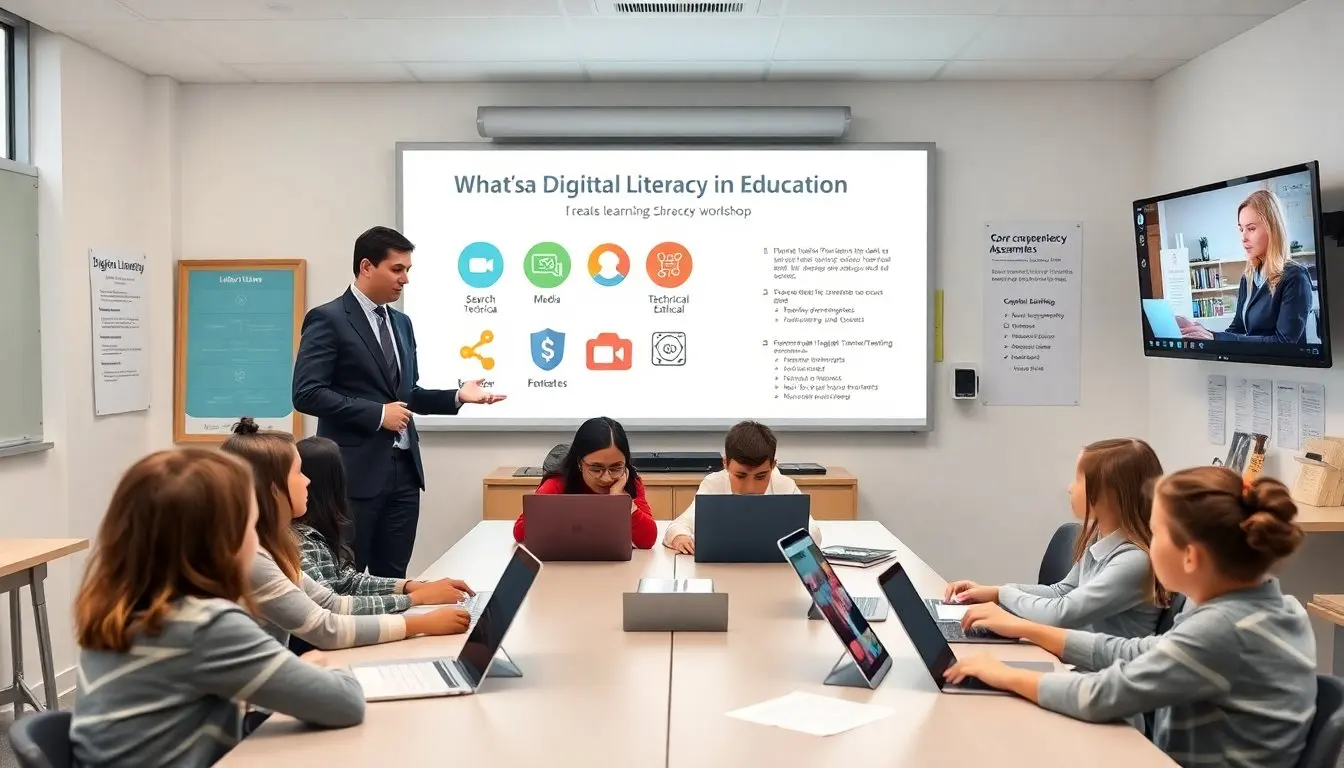
What is digital literacy in education and why does it matter now? The phrase describes the skills students need to find, evaluate, and use digital information. It also covers media use, technical tasks, and ethical choices. Educators must teach these skills. Schools must measure these skills. Students gain power and safety when they learn digital literacy in education.
Key Takeaways
- Digital literacy in education equips students with essential skills to find, evaluate, and use digital information safely and effectively.
- Schools integrate digital literacy across curricula by teaching information, media, technical, and ethical skills aligned to grade standards.
- Teachers use authentic tasks, modeling, and clear rubrics to assess digital literacy and support student growth over time.
- Collaboration between schools, families, and communities enhances student learning by providing resources, guidance, and equitable access to technology.
- Administrators track metrics like device access and teacher training to continuously improve how digital literacy is taught in education.
What Digital Literacy Means In Schools Today
Schools ask what is digital literacy in education to set goals. Districts define the term as a set of skills. Teachers explain how to read online text, judge sources, and use tools. Librarians teach students how to search and cite. IT staff teach basic device care and software updates.
Administrators set policies on privacy, access, and device use. Curriculum teams map digital tasks to grade standards. Classrooms show the skill in projects. Students learn to spot misinformation and use reliable sources. They learn to protect passwords and update privacy settings. They learn the norms for online discussion and collaboration.
Families want to know what is digital literacy in education so they can support learning at home. Schools share resources and training for parents. Communities fund access to devices and broadband. When schools, families, and communities align, students receive clear signals about tool use and behavior. This alignment helps students transfer classroom skills to real life.
Core Competencies: Information, Media, Technical, And Ethical Skills
Teachers break digital literacy into clear skill sets. One set covers information skills. Students learn to ask specific questions, run effective searches, and compare sources. They learn to summarize findings and cite origins. These tasks answer practical classroom needs.
A second set covers media skills. Students learn to read images, video, and audio. They learn to identify bias in framing and editing. They learn to produce short media pieces and add captions and credits. These tasks let students show knowledge in new formats.
A third set covers technical skills. Students learn to use common apps, manage files, and troubleshoot simple errors. They learn to install updates and choose safe passwords. They learn to protect devices from common threats. These tasks keep learning time focused and reduce downtime.
A fourth set covers ethical skills. Students learn to respect copyright and give credit. They learn to act with civility in online discussion. They learn to report harassment and protect privacy. These tasks help students keep trust and safety in digital spaces.
Teachers assess each skill with clear rubrics. Rubrics list observable actions. Teachers give feedback that points to the next step. This approach keeps assessment practical and fair.
Practical Strategies For Teaching And Assessing Digital Literacy
Teachers plan lessons that show what is digital literacy in education through tasks. They design short authentic tasks that require search, judgment, and creation. For example, students research a local topic, compare three sources, and publish a one-page summary. The task shows information skills and media skills at once.
Teachers use modeling and think-alouds. The teacher searches and comments on choices. Students watch the process and learn the steps. Teachers scaffold work with checklists and templates. They reduce cognitive load and let students practice specific skills.
Assessment should match the task. Teachers use performance tasks and short quizzes. They use rubrics that list evidence of skill. Teachers gather samples over time. They track growth rather than only assign a single grade. This method shows steady improvement and highlights gaps.
Schools provide access and time. They schedule device use and block periods for project work. They maintain simple device policies that protect privacy and keep class on task. Professional development helps teachers learn tools and methods. Coaches observe lessons and offer feedback.
Parents receive clear guidance. Schools send short tips and example projects. Parents learn how to ask good questions and check work. Communities offer public workshops and device loan programs. These supports increase equity.
Administrators measure outcomes with simple metrics. They track device access, teacher training hours, and student work samples. They survey students and families about confidence with tools. They use the data to set annual targets. This cycle drives steady improvement in how schools teach what is digital literacy in education.